

The Southeast Asian Refugee Crisis through the Eyes of French Canadian Jesuits
Many communities across the globe mobilized to provide support to the hundreds of thousands of refugees from Vietnam, Laos, and Cambodia, seeking shelter in neighboring Southeast Asian countries. Canadians privately sponsored over thirty thousand refugees in less than eighteen months, often through religious organizations. Why were religious actors and institutions uniquely positioned to both shift official processes and generate a wide mobilization to welcome Southeast Asian refugees in 1979?
While most of the literature has explored evolving state-society relationships in the sponsorship process, this paper analyzes the role of a religious organization, the French-Canadian Jesuits, in refugee protection. It claims that Canadian Jesuits were particularly suited to advocate for and provide greater protection to refugees for two reasons. Their pastoral duties as priests helped them mobilize parishioners and easily generate collective action. Second, their own experience as a scattered community, living across societies, cultures, and political borders helped them transfer crucial information, make use of administrative structures across different spaces, and redeploy resources and people depending on the situation. Jesuits were professional transnationals, fortified by centuries of experience as a community, both united as a single family in the same spiritual mission, and yet scattered across political borders.
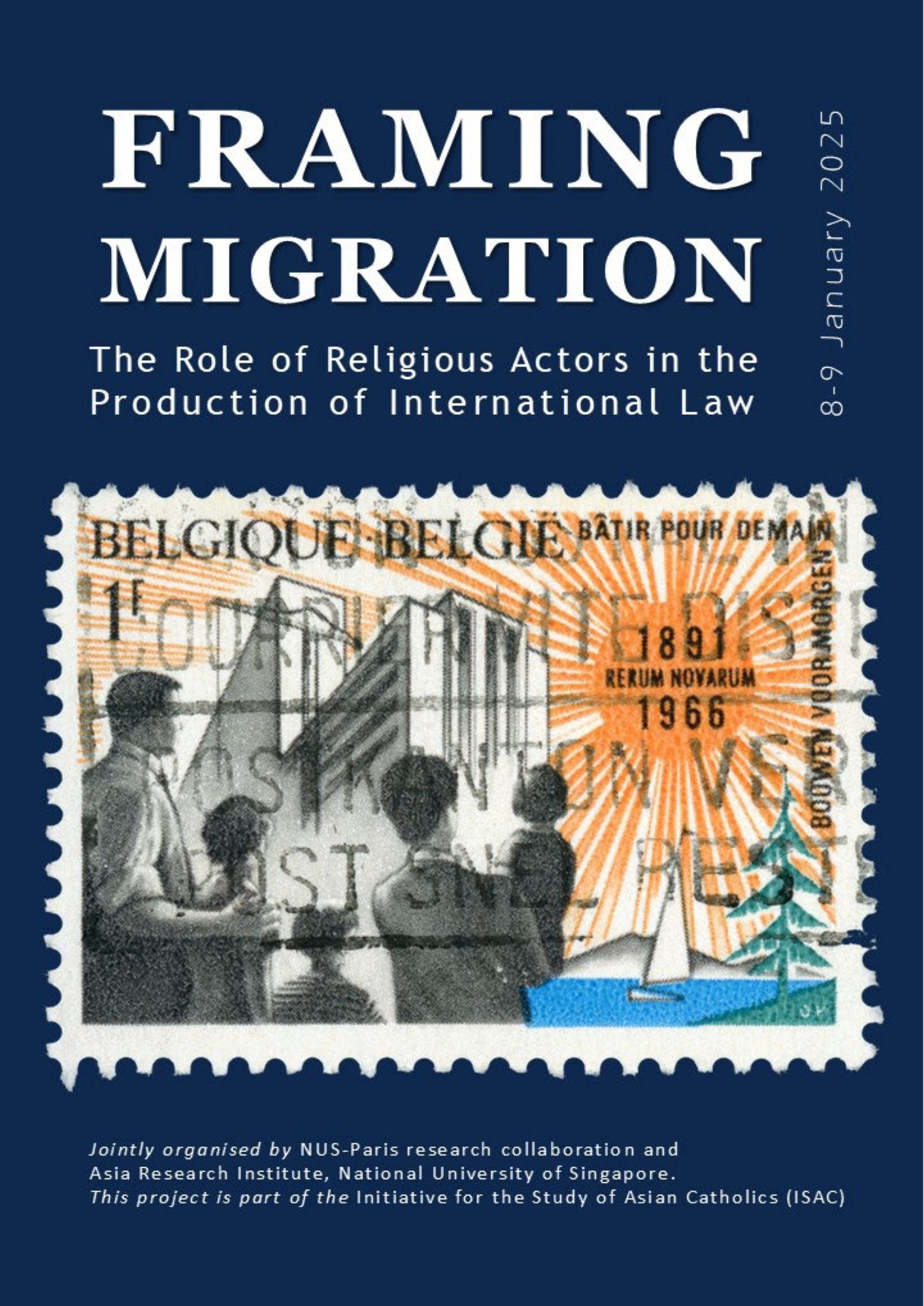
This paper was presented at the conference Framing Migration at the National University of Singapore on January 8–9, 2025.
Check out the conference report I co-wrote with Bryan Goh.
Here is a link to the series of podcast Bryan produced with the different speakers of the conference and here is the brief description of my contribution on the French Canadian Jesuits’ involvement in the Southeast Asian refugee crisis.